
About this case study
This scenario models a small agency with five clients. It does not claim that Amplispect replaces contracts, client approvals, or the creative work itself.
The agency bottleneck
A two-person agency manages three posts per week for each of five clients. The creative work is manageable, but publishing is fragile: client approvals arrive in different places, similarly named accounts sit beside one another, and a missed checkbox can send the right post to the wrong destination.
The agency needs a repeatable handoff between approval and distribution. It does not need more brainstorming software; it needs a clean place to assemble approved copy and media, choose the exact accounts, schedule the work, and confirm the result.
In this model, every connected account uses a clear client-first display name and the operator treats account selection as a required review step. Amplispect becomes the publishing control layer after approval.
A workable weekly rhythm
The agency can keep the process small enough to repeat every week:
- Collect final client approvals outside the publishing queue and mark only approved assets as ready.
- Create three posts per client, attach the correct media, and select only that brand’s connected accounts.
- Use a second-person check for account selection, publish time, and platform validation before scheduling.
- Schedule the 15 posts in batches while keeping each post’s destinations and status visible.
- Review partial or failed publishes from the queue instead of manually checking 45 native destinations.
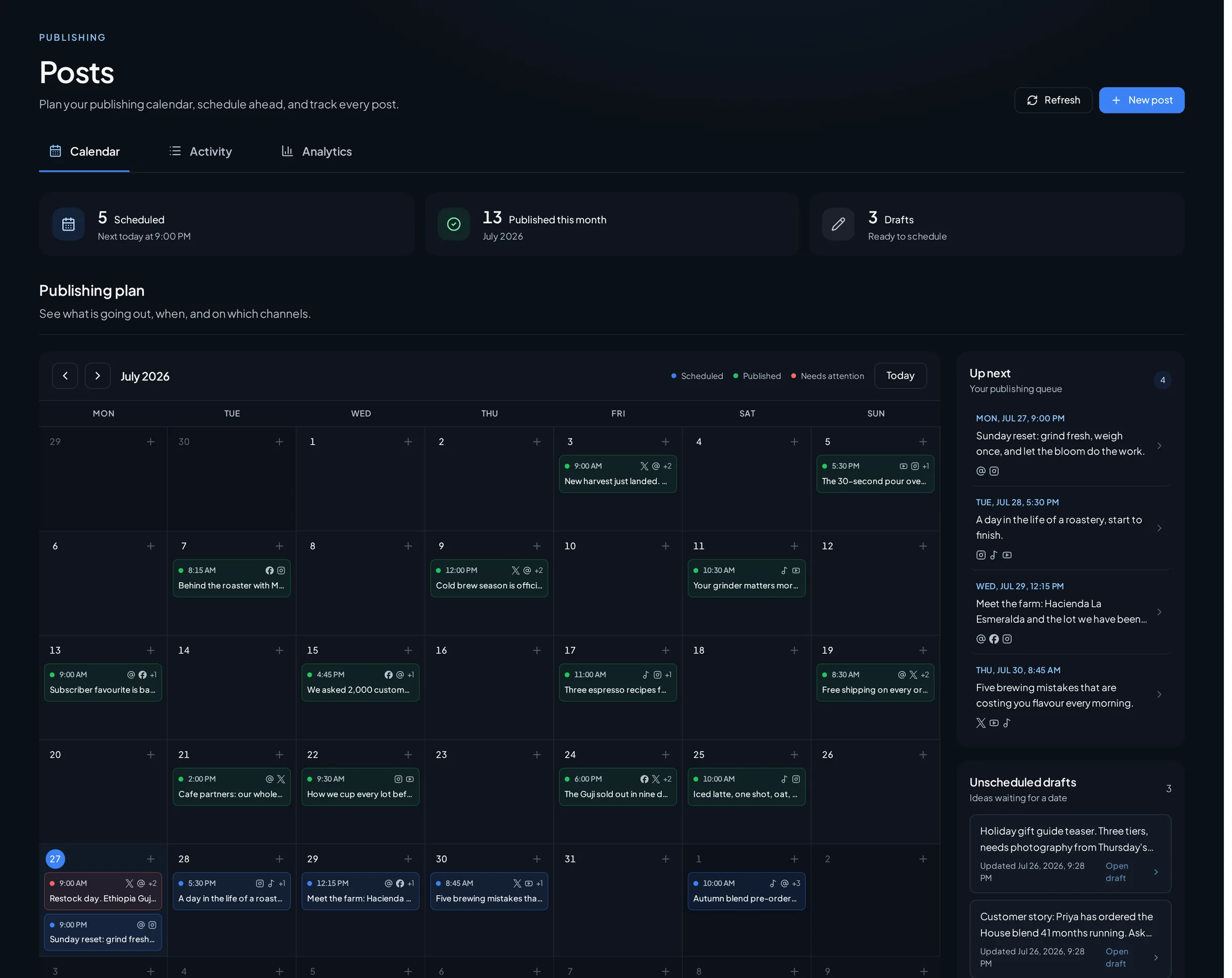
The control points that prevent mistakes
The most important control is explicit account selection. Amplispect does not assume where a post belongs; the operator chooses the destination accounts. That makes a short preflight checklist more useful than a complicated automation rule.
The second control is target-level status. A post sent to three networks can succeed on two and fail on one. Keeping those outcomes separate helps the agency fix the actual exception without republishing content that is already live.
The third control is a predictable schedule review. The team can check the upcoming queue at the same time each week and reserve daily attention for exceptions and comments.
The modeled operational outcome
Fifteen approved posts become 45 visible publishing targets in one weekly queue. The agency gains a clearer handoff and exception process; it does not gain automatic client approval or guaranteed error-free publishing.
The agency guardrail
Connected accounts should use unmistakable names, and every scheduled post should receive a destination check. A centralized tool reduces tab switching, but it cannot infer which client an ambiguous asset belongs to.
Frequently asked questions
Does Amplispect include client approvals?
This scenario assumes approval happens before the content enters the final publishing queue. The current workflow focuses on drafts, media, destination selection, scheduling, and publish status.
Can one post target several client accounts?
The interface allows multiple account selection, which is why the agency should use strict naming and a destination review. In normal client work, each post should target only the intended brand accounts.
What happens if one network fails?
Each destination has its own target status. The overall post can show a partial result, letting the operator identify the failed destination without confusing it with successful publishes.