
About this case study
This is a modeled setup workflow, not a reported customer result. It describes how the template tool behaves; it does not claim the resulting designs will outperform custom work.
The problem is drift, not taste
A small brand rarely fails at design because nobody has taste. It fails because every post starts from a duplicated file. Someone nudges the logo, someone else picks a slightly different blue, and after two months the feed looks like three brands sharing an account.
The founder in this scenario does not want a design system document. They want the next twenty posts to look related without a decision being made each time.
The realistic unit of work is the recurring format. Most small brands publish the same three or four kinds of post — a quote, a tip, a product callout, an announcement — and rebuild each one from scratch anyway.
Building the three templates
The founder can set the system up in one focused session:
- List the post formats that actually repeat, and stop at three or four rather than designing for hypothetical needs.
- Describe each layout in the template chat — the colours, the type hierarchy, where the logo sits, and the aspect ratio the channel needs.
- Refine through follow-up messages instead of restarting; each reply updates the same template rather than creating a new one.
- Name the editable fields for the parts that change per post — headline, supporting line, price, call to action — and leave everything else fixed.
- Save a square and a portrait version where the destinations genuinely differ, and keep the field names identical across both.
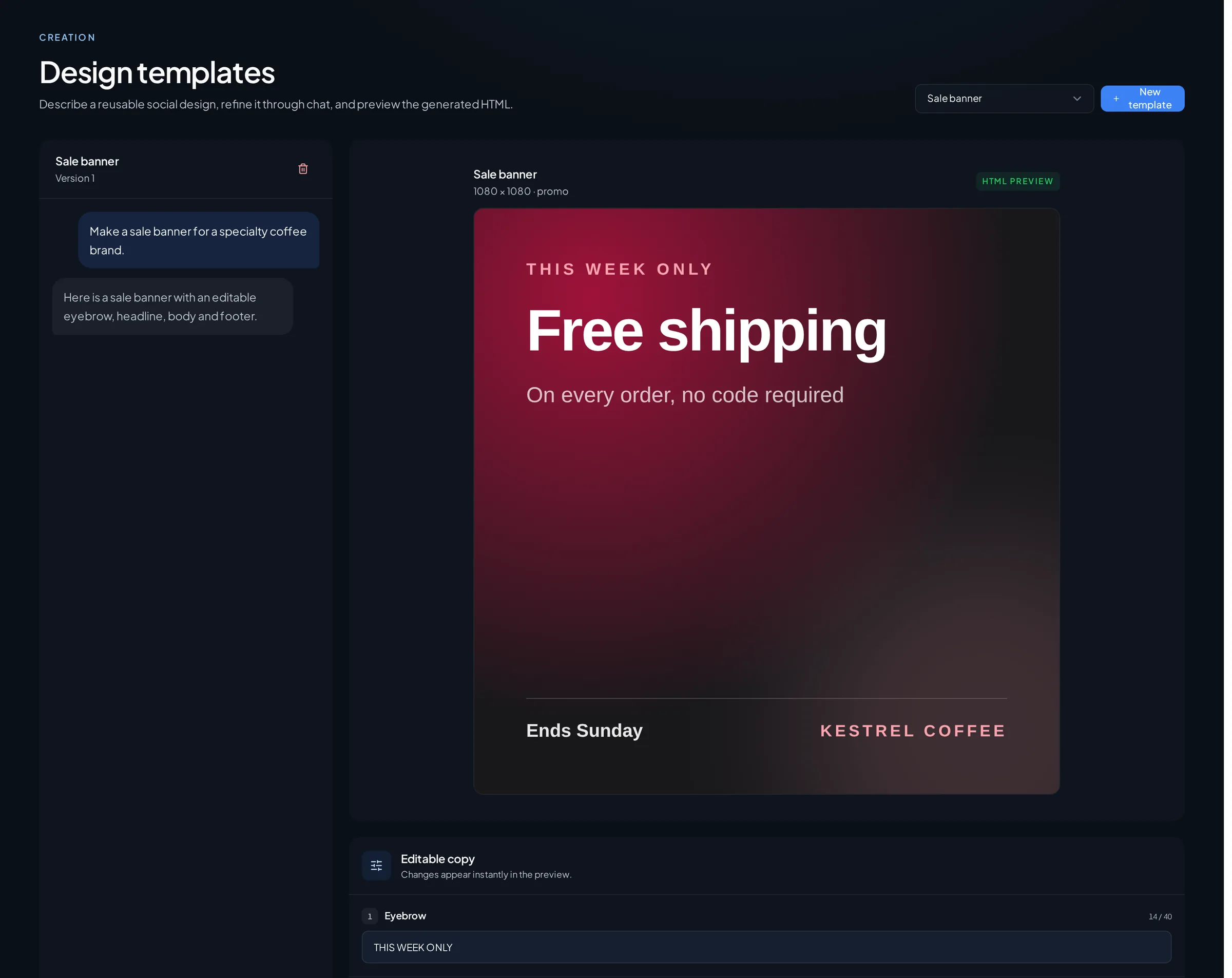
What using it looks like afterwards
Once the templates exist, making a post stops being a design task. The founder picks the layout that matches the format, edits the fields, and moves on to the caption and the destinations.
That change matters most on the days when there is no time. A brand that only looks consistent when someone is feeling careful is not consistent; a template holds the standard on a rushed Thursday afternoon too.
Templates can also be revised without disturbing published work. Deleting or reworking a template leaves the HTML snapshot attached to existing posts intact, so a refresh to the current look does not rewrite the archive.
The modeled operational outcome
Three templates cover the brand’s recurring formats, and per-post design work collapses to editing named fields. The gain is consistency and speed under time pressure — not better creative direction, which still comes from the person writing the brief.
The practical limit
Templates serve the repeating cases. A launch hero, a campaign key visual, or anything that needs to feel genuinely different is still custom work. Forcing an exceptional post into a routine layout is how a system starts to look tired.
Frequently asked questions
How many templates does a small brand actually need?
Usually three or four — enough to cover the formats that repeat every week. More templates recreate the original problem, because choosing between nine layouts is its own decision each time.
Can a template be changed after posts already use it?
Yes. Existing posts keep the HTML snapshot they were published with, so updating or deleting a template changes what comes next rather than rewriting what is already out.
Does this replace a designer?
No. It removes repetitive production work from formats that recur. Brand direction, campaign creative, and anything that needs to stand apart still benefit from a designer.
What should be an editable field and what should be fixed?
Make the copy editable and the structure fixed. If colours, spacing, and logo placement are fields, they will drift — which is the problem the template was meant to solve.