
About this case study
This is a modeled workflow, not a reported customer result. The volumes show what a small team could reasonably plan with the product.
The starting point
A solo founder is launching a new product on Friday. The product video is approved, but the caption still lives in a document and every social account has its own publishing flow. Doing the work natively would mean repeated uploads, repeated copy edits, and six separate checks on launch day.
The realistic goal is not to make every channel identical. It is to create one source of truth, split the campaign only where platform constraints require it, and finish the scheduling before launch day.
For this scenario, the founder uses one video-led post for the compatible visual channels and a separate text-only version for X. That keeps the workflow honest about the current media rules while still managing the full launch from one workspace.
The launch setup
The founder can prepare the campaign in one focused session:
- Connect Instagram, TikTok, YouTube, Facebook Pages, Threads, and X in Account Settings.
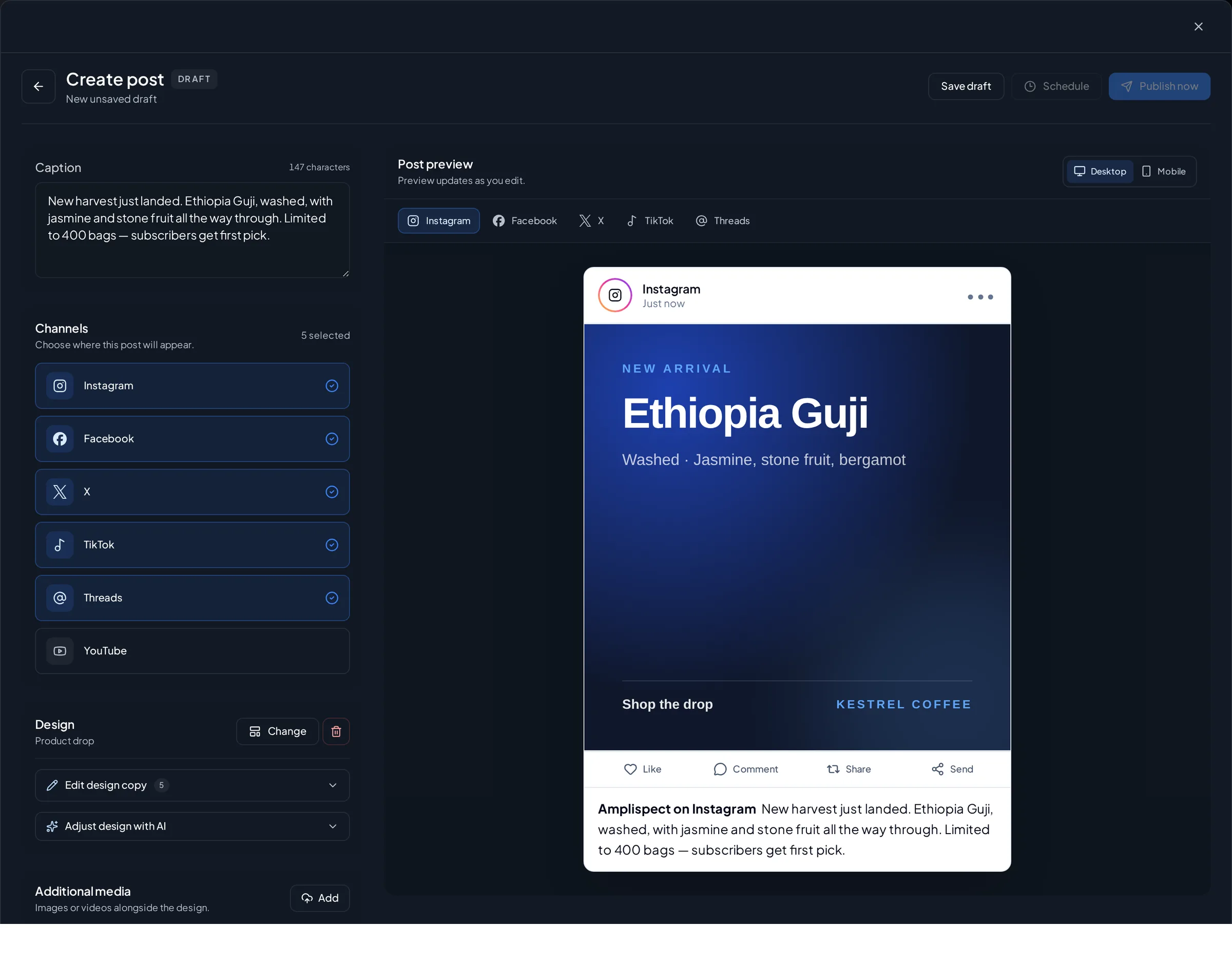
- Create the main launch post, upload the approved vertical video, and select the compatible video destinations.
- Review the platform checks before publishing, including the video requirement for YouTube and TikTok.
- Create a concise text-only companion for X instead of forcing the video asset into an unsupported target.
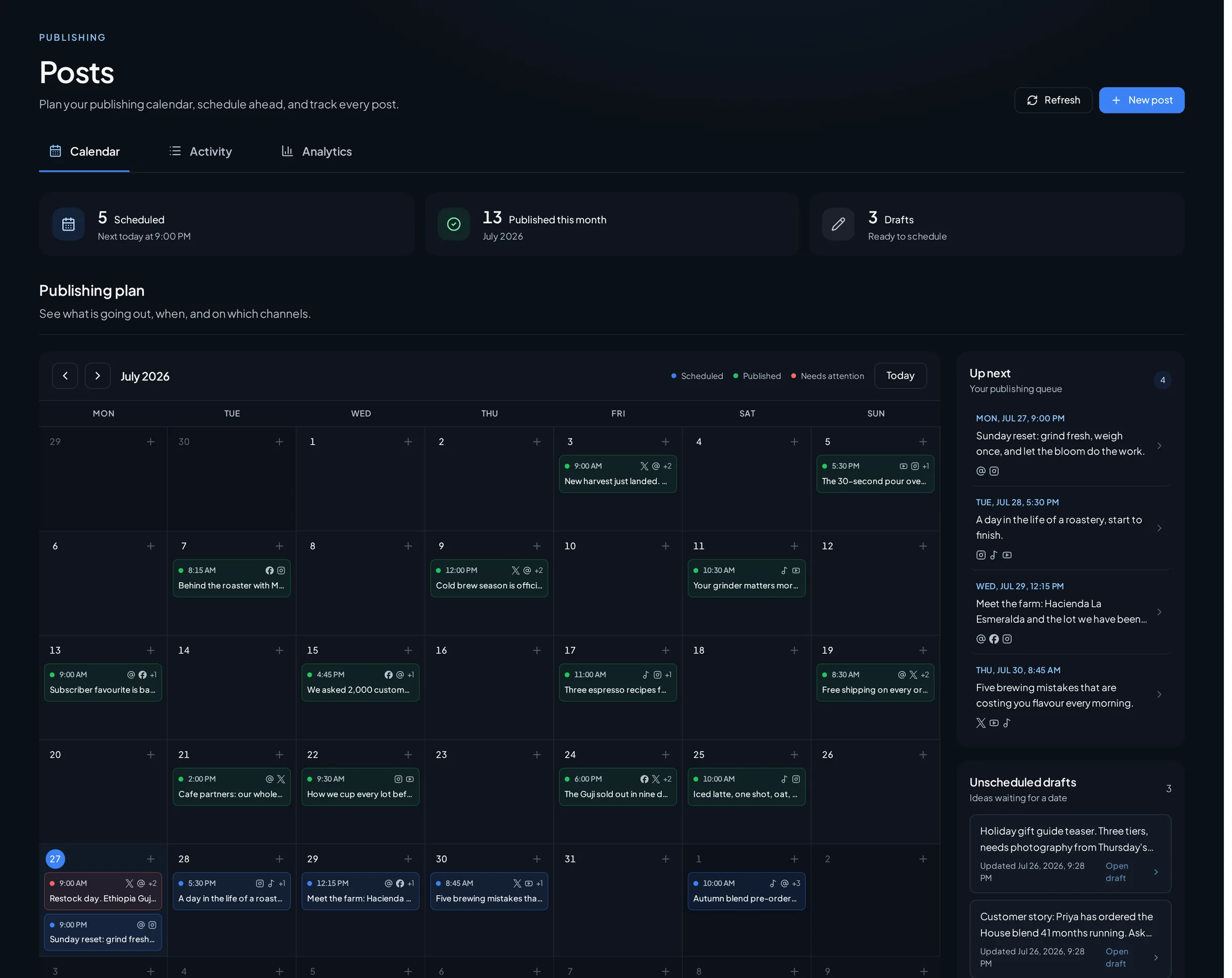
- Schedule both posts around the launch window and verify each destination in the publishing queue.
What the operating week looks like
By Monday, both content objects are reviewed and scheduled. On Friday, Amplispect creates a separate publishing target for every selected account, so the founder can see whether each destination is queued, publishing, published, or failed without opening every native app.
If one destination fails, the status remains attached to that target rather than turning the entire launch into a guessing exercise. The founder can focus on the exception while leaving successful destinations alone.
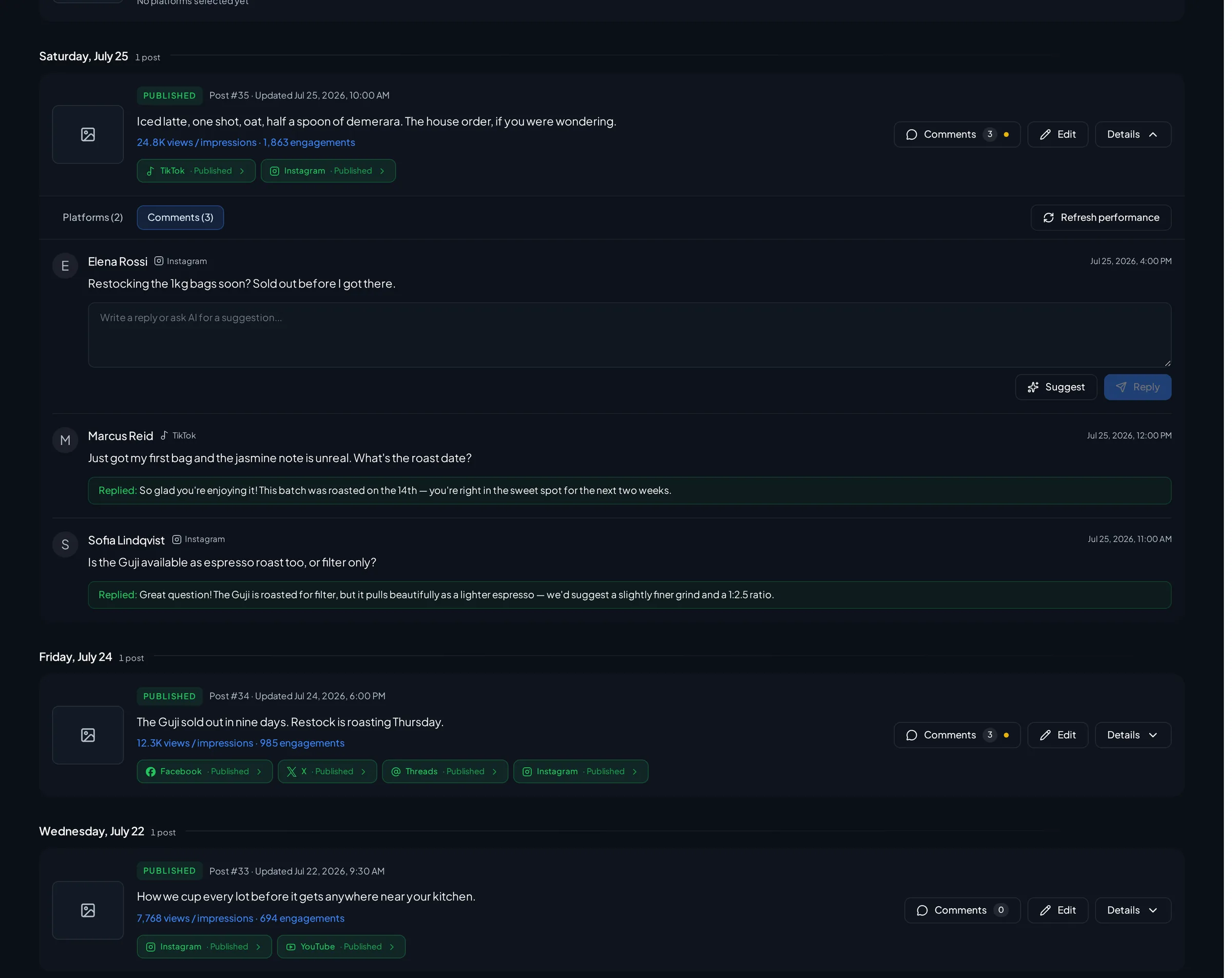
After publishing, supported comments can be synced back into the same workspace. The founder can draft a reply with assistance, edit it, and publish only after a human review.
The modeled operational outcome
The launch moves from six disconnected publishing sessions to two reviewed posts, six tracked destinations, and one place to check status and replies. The win is coordination and fewer handoffs—not a promised increase in reach or sales.
The practical limit
One universal post is not always the right unit of work. Media requirements, privacy defaults, and text limits still differ by network, so the founder should split content when a destination needs a genuinely different treatment.
Frequently asked questions
Can the exact same post go to all six networks?
Not in every format. A video can cover the compatible visual destinations, while X is currently handled as a text-only post. Amplispect checks platform requirements before publishing.
Can the founder schedule the launch in advance?
Yes. Each post can be assigned a future date and time, then tracked as scheduled before the publishing worker sends it to the selected accounts.
Does this guarantee better launch performance?
No. The workflow reduces operational repetition and makes execution easier to verify. Reach, engagement, and sales still depend on the offer, creative, audience, timing, and each platform.